
English| USD
Suggested for you
More currencies
Choose a language
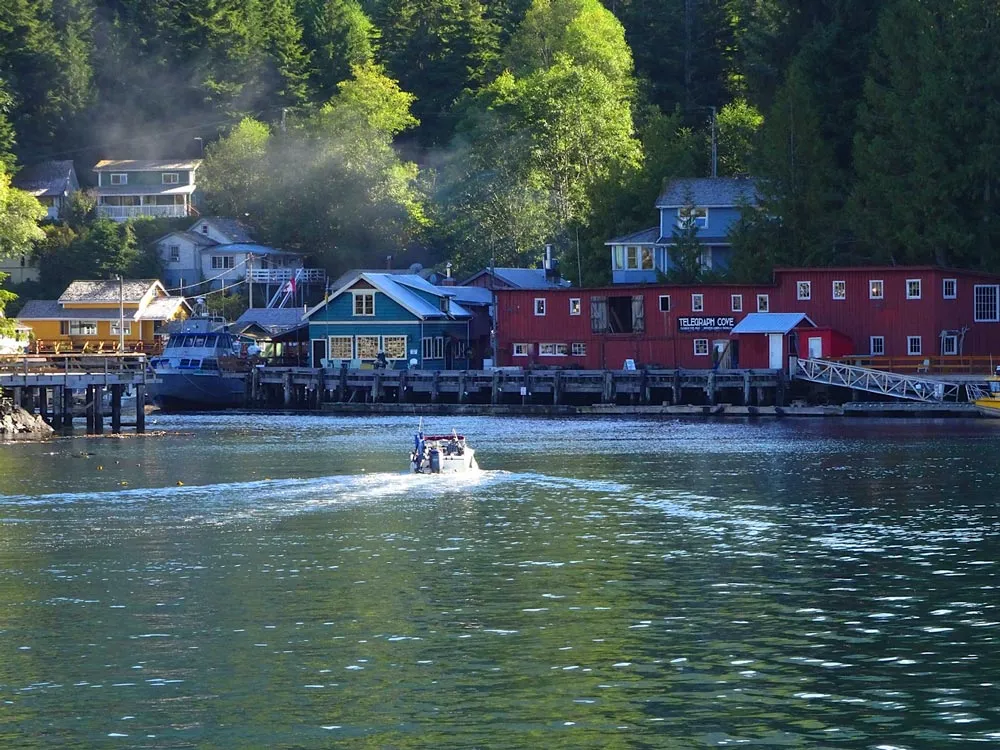
Telegraph Cove is a boardwalk village of nineteen restored buildings perched on pilings at the edge of Johnstone Strait, and almost everything about a sighting here comes down to when you show up. This telegraph cove whale watching best time guide sets out the months that matter, the daily rhythm of departures, and the caveats worth knowing before you commit to a date.
Quick answer
July through September is the strongest stretch, with peak wildlife activity and frequent boat departures across those three months. The village is open 08:30–17:30 daily and free to enter, and the recommended arrival window is 08:30–16:30. Earlier sailings usually meet calmer water; afternoon westerlies can build chop in the strait, though sightings continue regardless of the hour.
Johnstone Strait is one of the few places on earth where orcas rub their bodies on smooth pebble beaches — a learned behaviour passed between generations of the northern resident population, and one reason researchers have watched this stretch of coast since the 1970s. That history explains the shape of the season. The whales follow salmon, the salmon follow the summer, and the entire visitor rhythm of the cove is built around that arrival. Anyone weighing the telegraph cove whale watching best time is really weighing two overlapping calendars. The first is biological: northern resident orcas move into the strait as returning salmon runs build, while humpbacks — largely absent from these waters a generation ago — now feed here in growing numbers through late summer and into autumn. Minke whales, Pacific white-sided dolphins, Steller sea lions and Dall's porpoise fill out the roster. The second calendar is operational. Vessel schedules thicken when demand does, so a mid-July morning offers more departure choices than a shoulder-season afternoon, and the same trip in early October may run once a day or not at all. Weather does the rest of the sorting. Mornings on the strait tend toward glass; by early afternoon a northwest wind often rises through Blackfish Sound, which changes comfort more than it changes odds. Fog is common in late August and September and can delay rather than cancel. Layers matter more than season — a boat moving at speed generates its own cold, even in August. The practical takeaway is to treat the answer as a range rather than a single date. Visitors chasing the densest activity should target the high-summer weeks and book well ahead, since a Telegraph Cove whale watching tour on a peak weekend fills early. Those with flexibility often do better in the quieter first half of September, when humpback numbers hold, crowds thin, and the boardwalk itself is easier to enjoy. Multi-day stays remain the single best hedge against a fogged-in morning. Understanding the telegraph cove whale watching best time is less about finding one perfect window than about stacking small advantages — the right month, an early sailing, and a spare day in reserve.
“The whales follow salmon, the salmon follow the summer, and the entire visitor rhythm of the cove is built around that arrival.”
The peak season for whale watching in Telegraph Cove occurs from July through September, offering the highest probability of sightings. Planning your excursion during this window provides the best opportunity to observe diverse marine life in the region.
Temperatures 15°C to 20°C
This period aligns with peak wildlife activity and frequent boat departures. High marine mammal presence is common during these months.
—
This window captures the most frequent boat departures. Aligning your visit with these hours ensures access to scheduled wildlife tours.
Verdict: The best time to visit is between July and September, arriving within the 08:30–16:30 window to maximize wildlife viewing opportunities.
The facilities and whale watching operations in Telegraph Cove maintain consistent daily operating hours throughout the week. Visitors planning their excursions should align their arrival with these established times.
Telegraph Cove is located on the northeastern coast of Vancouver Island, accessible primarily by driving north from Nanaimo or Victoria. Most visitors reach the village by traveling along Highway 19, the main arterial route on the island.
Highway 19 to Telegraph Cove Road
Highway 19 to Telegraph Cove Road
Private vessel to Telegraph Cove Marina
The village is remote, so ensure your vehicle is fueled before exiting Highway 19 at the Telegraph Cove turnoff. Arriving at 24 Boardwalk, Telegraph Cove, BC V0N 3J0, Canada within the recommended arrival window helps ensure a smooth transition to your tour.
Access to Telegraph Cove village is free for all visitors. Costs for whale watching experiences are determined independently by commercial tour operators.
Verdict: While village access is free, total costs depend on the specific whale watching tour provider selected for your excursion.
Work through these steps in order, starting weeks ahead and finishing the morning you sail from 24 Boardwalk, Telegraph Cove.
Everything you need to know about telegraph cove whale watching best time
The telegraph cove whale watching best time is between July and September. During these months, wildlife activity in the Johnstone Strait is at its peak.
While marine life is present throughout the summer, peak activity for viewing transient and resident orcas occurs from July through September. Many operators schedule their boat departures heavily during this window.
The telegraph cove whale watching best time for spotting orcas generally aligns with the salmon runs, which typically peak in the late summer. Booking a tour during the core summer months provides the highest statistical probability of an encounter.
The telegraph cove whale watching best time of day for departures is within the recommended arrival window of 08:30 to 16:30. Frequent boat departures occur during these hours to capitalize on optimal lighting and marine conditions.
There is 0 CAD entrance fee to the village itself. Whale watching tours are priced separately and are managed by individual tour providers.
Children are generally welcome on whale watching excursions, though it is recommended to verify specific age requirements with the tour operator before booking. Ensure your visit aligns with the best arrival window to guarantee a smooth boarding experience for your family.
To plan your trip effectively, target the period between July and September for peak wildlife sightings. Arrive between 08:30 and 16:30 to ensure you have full access to village facilities and timely boat departures.